- Home
- About
ABOUT DR VADIA
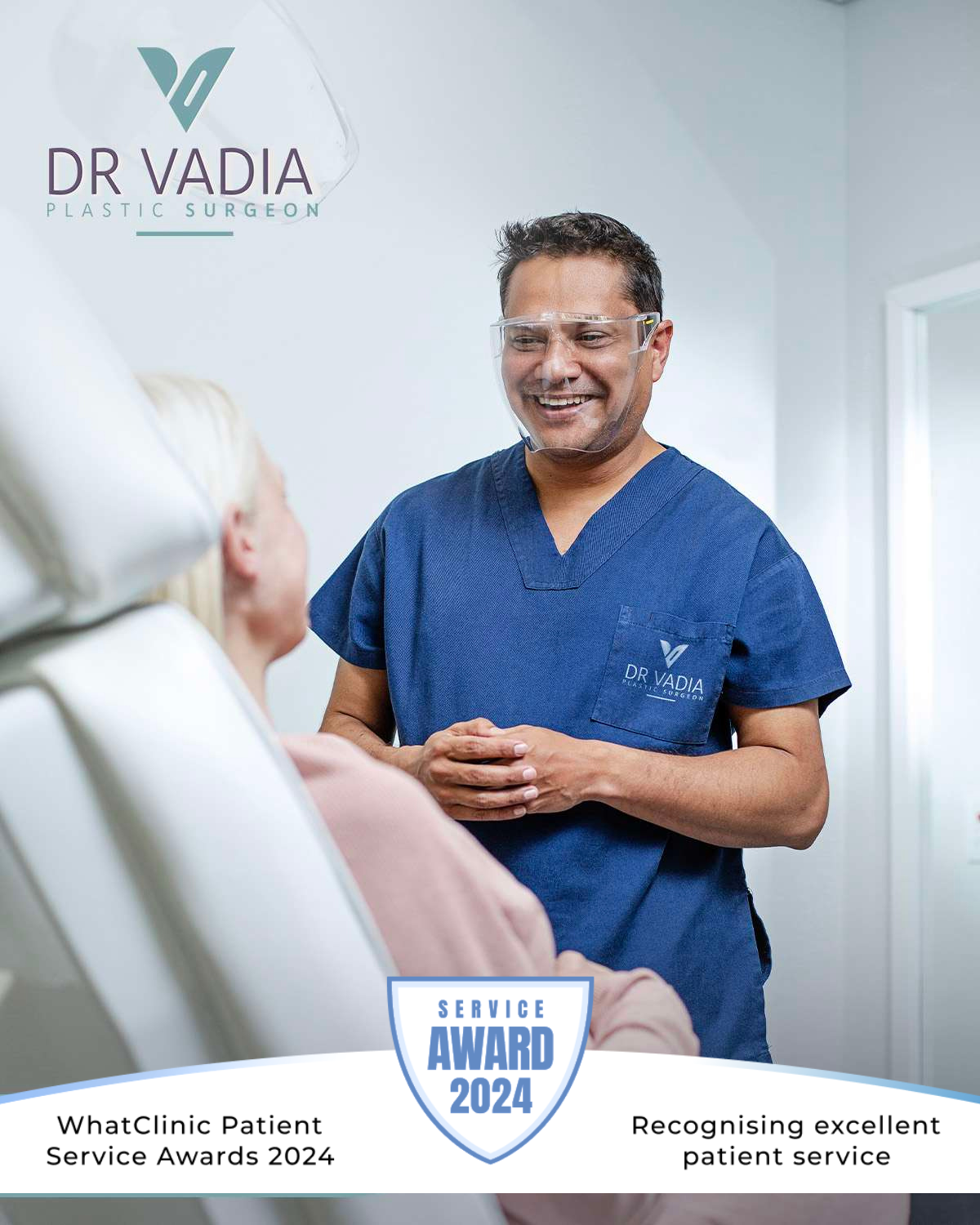
Dr Vadia is a Plastic, Reconstructive and Cosmetic Surgeon.
He operates from Netcare Rosebank Hospital which is located in the heart of the prestigious northern suburb of Rosebank in Johannesburg, as well as the Netcare Milpark Hospital situated in Parkview Johannesburg.
He is a Plastic Surgeon and General Surgeon and a member of the Association of Plastic Reconstructive and Aesthetic Surgeons of South Africa.
After practicing as a Specialist General Surgeon at Groote Schuur Hospital and New Somerset Hospital in Cape Town, he then trained as a Plastic, Reconstructive and Cosmetic Surgeon at Wits University and Johannesburg General Hospital.
Dr Vadia completed a 3 month fellowship at the Unversity Ziekenhuis, Gent, Belgium in 2015. During this time he gained experience in micro-surgical Breast reconstruction, micro-surgical Head and Neck reconstruction and Cosmetic Surgery. He also spent time in Seoul, South Korea and Taiwan for further exposure to microsurgery.
He has a keen interest in cosmetic surgery procedures, specifically breast augmentation and lifts, rhinoplasty (nose jobs), facelifts and body contouring (tummy tucks and liposuction). Non-surgical procedures include botox and fillers.
The practice’s mission statement is to use the best scientific evidence for the artistic enhancement and reconstruction of every individual, going beyond the specific anatomical issues to treat the patient holistically be it an emergency or elective procedure.
Dr Vadia strives to enhance the patient’s natural beauty in every procedure he performs
How could a cosmetic or reconstructive enhancement, enhance your life?
A significant part of living a life you love, is loving the body you’re living in. Today, more than ever before, we have the freedom to change the way our bodies look, feel and function. We have access to an empowering array of reconstructive and cosmetic enhancements, and with that the freedom to enjoy lives filled with more confidence, ease and body positivity.
This is why I specialise in plastic surgery – because it doesn’t only change bodies, it has the potential to change lives!
There are two main reasons that people choose to enhance their bodies and lives through plastic surgery: reconstructive reasons and cosmetic reasons.
Reconstructive surgery: restoring form and function. Reconstructive surgery is performed to reconstruct parts of the body that have become damaged, dysfunctional or deformed, most commonly due to a birth defect, accident, trauma or disease. The most common goal of reconstructive surgery is to ensure the healthy functioning of the body, or to minimise the damage that resulted from an event. Examples of reconstructive surgery include repairing a cleft lip or palate, reattaching a finger or toe that has been amputated, reducing the severity of the appearance of burns, and reshaping breasts after a mastectomy.
Cosmetic surgery: sculpting the body beautiful. Cosmetic surgery is done to alter some aspect of selected physical features, to change a person’s appearance in a way that’s aesthetically pleasing to them. Cosmetic surgery includes a range of procedures such as facelifts, liposuction, breast augmentation or breast lifts, and the contouring and lifting of parts of the body such as thighs and buttocks.
The beautiful history of plastic surgery
The term plastic surgery stems from the Greek word plastikos, which means to reshape, or to give form to something. This reflects the potency of plastic surgery as a way of reshaping the human body; either to improve the way the body functions or enhance its appearance; and hints at its potential to shape our life experience in a positive way.
While today’s top plastic surgery procedures reflect the cutting edge of medical science, the practice itself goes back thousands of years. The first records of plastic surgery procedures appear in the “Sushruta Samhita”, a Sanskrit text compiled in the 6th Century BCE by Indian physician Sushruta, detailing the work he did with nasal reconstruction and skin grafts.
The birth and growth of Plastic surgery however was not confined to a single place or a single point in history. The fundamental human need to surgically alter physical conditions that adversely affect people’s lives, contributed to the advancement of plastic surgery procedures and techniques on a global scale across the centuries.
It was during World War One, when the devastating nature of war injuries; especially facial injuries due to burns, gunshots and blasts; spurred the modern advancement of plastic surgery. During the decades that followed, advances in anaesthesia, antibiotics and medical care made levels of surgery possible that had not existed before. The advent of silicone in the 1960s, heralded new possibilities for plastic surgery in the field of breast and other enhancements.
The advancement of plastic surgery for reconstructive purposes during the first part of the twentieth century also opened new possibilities of plastic surgery as an elective procedure for cosmetic purposes. Over the decades, cosmetic surgery blossomed from the secretive indulgence of a select few, to an easily accessible and celebrated part of modern culture. A far cry from emergency surgery and experimental procedures, today’s most popular plastic surgery procedures including breast enhancements and reductions, facelifts, tummy tucks, and the sculpting and contouring of the face and body, are performed daily around the world.
I am proud to have a practice that continues this great tradition and spirit of plastic surgery: the transformation of lives through reconstruction and enhancement, and the celebration of infinite expressions of beauty.
My most popular reconstructive procedures include:
- Reconstruction after cancer (including skin cancer, breast cancer and head and neck cancer, urogenital cancer)
- Post-burn reconstruction
- Acute and chronic post-traumatic reconstruction
- Reconstruction following “botched operations”
- Emergency reconstruction, which is done at Milpark hospital as part of the Emergency Room and Trauma surgery team.